
Introduction
The best procurement marketplaces for Kenyan businesses can make supplier discovery faster, improve access to tenders, and help buyers compare opportunities without relying on scattered phone calls, emails, and spreadsheets. Procurement marketplaces for Kenyan businesses vary widely: some connect buyers with suppliers, some publish tender notices, some support RFQs and prequalification, and others add bid preparation or procurement workflow tools.
This editorial list compares procurement marketplaces for Kenyan businesses based on local relevance, supplier and opportunity coverage, search or RFQ functionality, buyer usefulness, transparency of platform information, and the difference between marketplace services and official public-procurement systems. It is not a government endorsement, supplier guarantee, or recommendation to skip due diligence.
If you are looking for a full internal purchasing system, see Tenderzville’s guide to procurement software platforms in Kenya. If you want to start with local supplier discovery, visit Source.Ke on Tenderzville.
Quick comparison
This shortlist of procurement marketplaces for Kenyan businesses separates supplier networks from tender databases so readers can choose the right discovery tool.
| Rank | Platform | Best for | Main marketplace function | Kenya relevance |
|---|---|---|---|---|
| 1 | Source.Ke | Private-sector supplier discovery and RFQs | Find suppliers, post RFQs, compare quotations | Kenya-focused; promotes coverage across 47 counties and 100+ categories |
| 2 | Tenderers KE | End-to-end tender and prequalification workflows | Profiles, bids, evaluation, awards, LPOs, delivery notes | Kenya-focused platform with supplier and entity workflows |
| 3 | Scale | Governed RFx execution connected to an ERP | Requisitions, RFIs, RFQs, RFPs, evaluation and award packs | Kenya-based product with Kenyan business references shown on its site |
| 4 | TenderSoko | East African tenders and supplier networking | Tender discovery, supplier profiles, business services and partnerships | Kenya plus Uganda, Tanzania, Rwanda and other markets |
| 5 | TendersKenya | Broad tender-information search | Tenders, RFQs, RFPs, consultancies and prequalifications | Kenya-focused tender-information platform |
| 6 | Bidnexis | Filtered tender discovery and sponsored visibility | Search, filters, AI tender search and sponsored listings | Kenya tender market with public, NGO, parastatal and private categories |
| 7 | TendersOnTime | Global tender intelligence with Kenya coverage | Aggregated notices, search, alerts and bid-support services | Global platform with a Kenya tender database and partner services |
How to interpret this ranking: The order is editorial. Source.Ke and Tenderers KE rank highly for Kenya-focused supplier and procurement workflows, while TendersKenya, Bidnexis, and TendersOnTime are stronger when the main need is opportunity discovery. Always confirm the original buyer notice and submission instructions.
1. Source.Ke — Best for Kenyan supplier discovery and RFQs
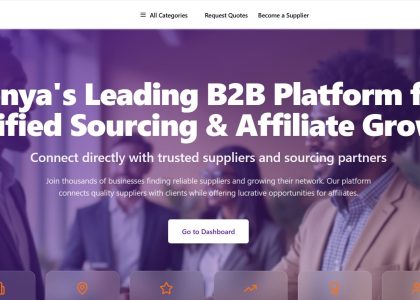
Source.Ke is the most directly relevant choice for businesses that want to find Kenyan suppliers, post requests for quotations, and compare offers in one marketplace. The platform presents itself as a supplier prequalification and RFQ platform for Kenya’s private sector, with supplier discovery across locations and categories.
What buyers can do
- Search supplier listings by category and location.
- Post RFQs and receive quotations from multiple suppliers.
- Review supplier credentials, ratings, and certifications as presented on the platform.
- Compare value criteria such as price, warranty, after-sales support, package completeness, delivery speed, rating, and trust.
- Identify suppliers across Kenya, including the platform’s stated 47-county coverage.
Best fit
Source.Ke is a strong option for SMEs, NGOs, schools, institutions, distributors, contractors, and procurement officers who need a local sourcing layer rather than a full ERP. It is particularly useful when the buyer wants to discover vendors before building a shortlist.
Important limitation
Source.Ke’s own disclaimer states that it connects buyers and suppliers but does not guarantee the accuracy, completeness, or quality of listings, products, or services. Buyers must independently verify KRA status, BRS records, references, capacity, quality, delivery terms, and contract details before committing funds.
2. Tenderers KE — Best for end-to-end tender and prequalification workflows
Tenderers KE goes beyond a basic notice board. Its site describes a workflow for suppliers, procuring entities, and internal procurement teams, including supplier profiles, prequalification, tender publishing, bid invitations, AI-assisted evaluation, award letters, LPO approvals, and delivery notes.
What makes it different
- Suppliers create a profile once, with documents and certificates attached to future applications.
- Entities can publish tenders and prequalification categories.
- Committees can evaluate bids with AI-assisted scoring while retaining human control.
- Award and regret letters can be issued through the workflow.
- Suppliers and entities can track LPOs and delivery notes.
- Internal teams can use requisition and approval workflows without running a public tender.
Best fit
Tenderers KE fits suppliers that repeatedly apply for tenders and organizations that want more than tender discovery. It may also suit entities seeking a single platform for supplier onboarding, bid evaluation, award records, and fulfillment tracking.
Important limitation
AI-assisted scoring is not the same as an automated or legally binding procurement decision. Committees should retain documented human oversight, follow applicable procurement rules, and verify that the platform’s workflow matches the entity’s authority, recordkeeping, and compliance requirements.
3. Scale — Best for governed RFx execution connected to an ERP
Scale positions itself as a governed execution layer above an organization’s ERP. Instead of replacing the finance system, it focuses on the upstream decisions that happen before a purchase order and payment: requisitions, sourcing, evaluation, approvals, and award documentation.
What buyers can do
- Capture and route internal requisitions.
- Run RFIs, RFQs, and RFPs with controlled invitations and clarifications.
- Apply weighted scoring and evaluation panels.
- Produce a structured decision pack for each award.
- Validate vendors, projects, categories, and budgets against ERP data.
- Hand approved outcomes back to the ERP for purchase orders, receipting, invoicing, and payment.
Scale’s site displays Kenyan business references including Davis & Shirtliff, Nation Media Group, Galana Energies, M-KOPA, and others. These are platform-published references, so prospective buyers should request current, comparable references during due diligence.
Best fit
Scale is suitable for procurement teams that already have an ERP but still manage sourcing decisions through email and spreadsheets. It is less like a public tender directory and more like procurement execution infrastructure.
4. TenderSoko — Best for East African tender and supplier networking
Among procurement marketplaces for Kenyan businesses, TenderSoko is notable for combining tender discovery with regional supplier and partnership networking.
TenderSoko combines tender discovery, supplier profiles, business services, and partnership requests across Kenya, Uganda, Tanzania, Rwanda, and other African markets. Its platform lists government, institutional, NGO, private, and development-related opportunities.
Useful features
- Browse tender notices by market.
- Search supplier profiles and business services.
- Post or explore joint-venture and partnership opportunities.
- Access tender-writing, bid-preparation, legal, contract, and business-registration services listed by providers.
- Receive closing-date alerts and use its mobile app, according to the platform.
- Promote a business through advertising or featured visibility.
Best fit
TenderSoko is a useful choice for Kenyan suppliers that want regional growth rather than only Nairobi or county-level opportunities. It can also help buyers identify service providers and potential partners.
Important limitation
A tender marketplace or aggregator may publish an opportunity without being the procuring entity. Always locate the original buyer, confirm the closing date, obtain the official tender document, and follow the stated submission channel.
5. TendersKenya — Best for broad Kenya tender-information search
For suppliers monitoring procurement marketplaces for Kenyan businesses, its category and document-type filters can make daily opportunity research more manageable.
TendersKenya organizes Kenya opportunities across tenders, consultancies, prequalifications, RFQs, RFPs, expressions of interest, supplier registrations, and many industry categories.
Why it is useful
The platform offers detailed filters for industry, document type, tender type, and company selection. Its categories cover sectors such as construction, IT, healthcare, logistics, manufacturing, energy, education, consulting, agriculture, and office supplies.
This breadth helps suppliers create a repeatable monitoring routine. Instead of searching many individual organization websites every morning, a business can use categories and closing dates to build a focused opportunity list.
Best fit
TendersKenya is best for contractors, consultants, suppliers, NGOs, and service providers that want a broad searchable feed of Kenya-related opportunities.
Important limitation
Some documents and company details may require login or subscription. The platform is an information and opportunity-discovery service; it should not be treated as the official government procurement system. Confirm notices through the procuring entity or the relevant official portal.
6. Bidnexis — Best for filtered tender discovery and sponsored visibility
Bidnexis adds an AI-search angle to procurement marketplaces for Kenyan businesses, although users should still verify every result at source.
Bidnexis’s Kenya tender market provides searchable opportunities with filters for category, status, organization type, and deadline. Its page also presents an AI tender-search option where users describe what they need in plain English.
Useful features
- Filter by open, closed, or awarded status.
- Search categories ranging from agriculture and construction to IT, healthcare, energy, transport, and professional services.
- Save or monitor tenders.
- Review public, NGO, parastatal, institutional, and private opportunities.
- Use sponsored tender placement for increased visibility, according to the platform.
- Search using natural-language prompts through the advertised AI feature.
Best fit
Bidnexis is useful for suppliers that need structured search and want to narrow a large tender market by sector or deadline. It may also suit organizations that want to advertise an opportunity to a targeted supplier audience.
Important limitation
Sponsored placement is a paid visibility service, not proof that a tender is more suitable or that a supplier is qualified. Buyers and suppliers should assess the underlying opportunity independently.
7. TendersOnTime — Best for global tender intelligence with Kenya coverage
For exporters and regional suppliers, TendersOnTime extends procurement marketplaces for Kenyan businesses into a wider international tender-intelligence workflow.
TendersOnTime’s Kenya tender page aggregates Kenya opportunities from multiple sources, including newspapers, government websites, and e-tendering systems, according to its own description. It offers search and alert services, with paid membership for expanded access.
Useful features
- Search Kenya government, public, private, and e-procurement notices.
- Filter opportunities by deadline, status, sector, and tender type.
- Receive customized tender alerts through paid plans.
- Access a wider international tender database when a business is expanding beyond Kenya.
- Investigate bid-support and local-agent services advertised for Kenya.
Best fit
TendersOnTime is best for established suppliers, consultants, exporters, and international companies that want Kenya alongside a larger global tender-intelligence workflow.
Important limitation
The platform is an aggregator, not the Kenyan government. Its own page describes information collected from different sources, so users should verify every material detail against the original issuing organization and official submission instructions.
Procurement marketplaces are not all the same
The phrase procurement marketplaces for Kenyan businesses covers at least four different platform models:
- Supplier and RFQ marketplace: Source.Ke helps a buyer discover suppliers and request quotes.
- Tender and prequalification workflow: Tenderers KE supports profiles, applications, evaluation, awards, and fulfillment.
- Procurement execution layer: Scale governs requisitions, RFx, evaluation, and the handoff to an ERP.
- Tender-information aggregator: TenderSoko, TendersKenya, Bidnexis, and TendersOnTime help users discover opportunities and services.
Understanding the model prevents a common mistake: buying an information subscription when the organization actually needs approvals, supplier records, purchase orders, invoices, and audit trails.
Are these official Kenya government procurement systems?
No. Commercial marketplaces and aggregators should not be confused with Kenya’s official e-GP system or the Public Procurement Information Portal. The Kenya e-GP portal describes supplier registration, e-tendering, evaluation, contract management, e-catalogues, and public procurement workflows. The PPIP portal publishes public procurement information.
A private marketplace may help a supplier discover an opportunity or compare vendors, but it does not automatically establish eligibility for a government tender. Follow the original procuring entity’s instructions and the official portal requirements.
Buyer checklist for choosing a marketplace
Before joining or paying for one of these platforms, check:
- Does it serve your buyer type: private company, NGO, school, contractor, or public entity?
- Does it support supplier discovery, RFQs, tender alerts, prequalification, bid submission, or internal approvals?
- Are supplier profiles verified, and what exactly does “verified” mean?
- Can you export records, quotations, bid documents, and audit evidence?
- Are opportunity closing dates and source documents clearly displayed?
- Does the platform charge buyers, suppliers, advertisers, or subscribers?
- Are listings current, duplicated, sponsored, or independently confirmed?
- Does the platform integrate with your ERP, accounting system, or document workflow?
- What personal, commercial, or bid data is stored, and how is access controlled?
- What is your process for checking KRA, BRS, licenses, references, capacity, and delivery performance?
Conclusion
The best procurement marketplaces for Kenyan businesses depend on the job to be done. Choose Source.Ke when local supplier discovery and RFQs are the priority. Choose Tenderers KE when the workflow must extend from profiles and prequalification to bids, awards, LPOs, and delivery notes. Choose Scale when a governed sourcing layer must connect to an existing ERP. Use TenderSoko, TendersKenya, Bidnexis, or TendersOnTime when tender intelligence and opportunity monitoring matter most.
The safest approach is to combine marketplace convenience with independent supplier checks, original tender verification, clear evaluation criteria, and documented approvals. For more Kenyan supplier and tender insights, explore Tenderzville and discover suppliers through Source.Ke.