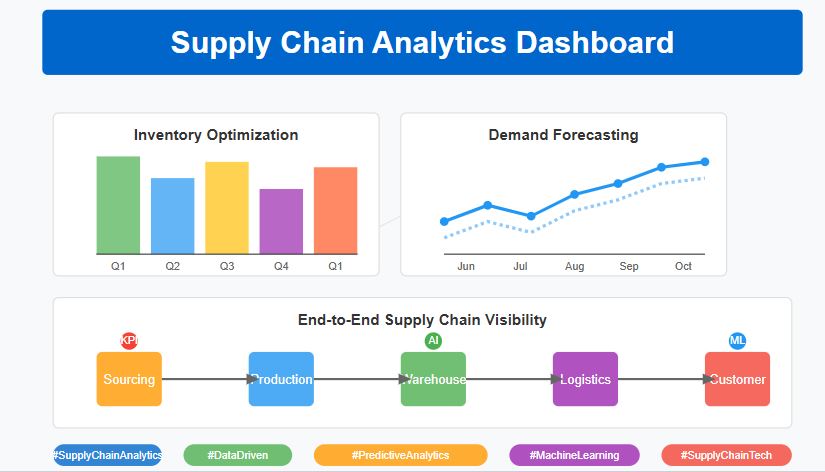
Supply chain analytics software and tools are revolutionizing how businesses optimize their operations, reduce costs, and gain competitive advantage in today’s complex global market. Modern supply chain optimization techniques leverage advanced analytics, predictive modeling, and real-time data visualization to transform traditional logistics management into strategic business assets. Organizations implementing end-to-end supply chain visibility solutions are experiencing dramatic improvements in operational efficiency, customer satisfaction, and profitability through intelligent inventory optimization and demand forecasting.
The Evolution of Supply Chain Analytics and Business Intelligence
Supply chain optimization has undergone remarkable transformation over the past decades. What was once a primarily manual process has evolved into a sophisticated ecosystem leveraging advanced analytics platforms, machine learning algorithms, and IoT-enabled logistics systems:
Traditional approach: Reactive decision-making based on historical patterns and human intuition Modern approach: Proactive optimization using real-time supply chain data, predictive analytics models, and automated systems
This evolution reflects broader technological advancement and heightened business pressures:
- Globalization creating more complex, geographically dispersed supply chain networks
- Rising customer expectations for faster delivery and greater supply chain transparency
- Market volatility requiring more agile and resilient logistics operations
- Sustainability concerns demanding responsible sourcing and reduced environmental impact through green supply chain management
Today’s supply chain analytics software combines diverse technologies including artificial intelligence, machine learning algorithms, IoT sensors, cloud computing, and interactive data visualization tools to provide unprecedented visibility and control across the entire value chain.
Key Components of Supply Chain Analytics Solutions
Modern supply chain analytics software encompasses four primary types of analysis, each serving distinct business objectives in the logistics management ecosystem:
1. Descriptive Analytics for Supply Chain Visibility
The foundation of supply chain business intelligence, descriptive methods answer the question “What happened?” by organizing historical data into meaningful insights:
- Inventory analysis dashboards: Tracking stock levels, turnover rates, and carrying costs
- Supply chain KPI dashboards: Measuring metrics like order fulfillment rates, lead times, and on-time delivery
- Cost analysis tools: Identifying spending patterns and expense drivers through procurement analytics
- Supplier performance analytics: Evaluating vendor performance across multiple dimensions
These retrospective insights establish baseline performance and highlight areas requiring supply chain optimization.
2. Diagnostic Analytics for Root Cause Identification
Building on descriptive findings, diagnostic supply chain analytics addresses “Why did it happen?” by identifying causal relationships:
- Root cause analysis tools: Tracing quality issues to specific processes or suppliers
- Variance analysis dashboards: Understanding deviations from expected performance
- Correlation analytics: Revealing connections between seemingly unrelated factors in logistics data
- Process mapping visualization: Identifying bottlenecks in logistics operations
This deeper understanding helps organizations address underlying causes rather than symptoms in their supply chain management strategy.
3. Predictive Analytics for Supply Chain Planning
Moving from historical focus to future orientation, predictive supply chain analytics answers “What will happen?” through statistical modeling and machine learning algorithms:
- Demand forecasting software: Anticipating future order volumes with greater accuracy
- Inventory optimization algorithms: Determining optimal stock levels to balance availability and costs
- Supply chain risk analytics: Identifying potential disruptions before they occur
- Lead time prediction models: Estimating realistic delivery timeframes based on multiple variables
These forward-looking capabilities enable proactive supply chain planning and risk mitigation.
4. Prescriptive Analytics for Automated Decision-Making
The most advanced form of supply chain analytics software, prescriptive methods address “What should we do?” by recommending optimal actions:
- Route optimization algorithms: Calculating most efficient delivery paths
- Supplier selection analytics: Recommending ideal vendors based on multiple criteria
- Automated replenishment systems: Triggering orders at optimal times through inventory analytics
- Supply chain scenario planning: Evaluating potential responses to changing conditions
These powerful tools transition analytics from informational to actionable, often incorporating AI-powered supply chain automation.
Transformative Benefits of Supply Chain Analytics
Modern supply chain analytics software encompasses four primary types of analysis, each serving distinct business objectives in the logistics management ecosystem:
1. Descriptive Analytics for Supply Chain Visibility
The foundation of supply chain business intelligence, descriptive methods answer the question “What happened?” by organizing historical data into meaningful insights:
- Inventory analysis dashboards: Tracking stock levels, turnover rates, and carrying costs
- Supply chain KPI dashboards: Measuring metrics like order fulfillment rates, lead times, and on-time delivery
- Cost analysis tools: Identifying spending patterns and expense drivers through procurement analytics
- Supplier performance analytics: Evaluating vendor performance across multiple dimensions
These retrospective insights establish baseline performance and highlight areas requiring supply chain optimization.
2. Diagnostic Analytics for Root Cause Identification
Building on descriptive findings, diagnostic supply chain analytics addresses “Why did it happen?” by identifying causal relationships:
- Root cause analysis tools: Tracing quality issues to specific processes or suppliers
- Variance analysis dashboards: Understanding deviations from expected performance
- Correlation analytics: Revealing connections between seemingly unrelated factors in logistics data
- Process mapping visualization: Identifying bottlenecks in logistics operations
This deeper understanding helps organizations address underlying causes rather than symptoms in their supply chain management strategy.
3. Predictive Analytics for Supply Chain Planning
Moving from historical focus to future orientation, predictive supply chain analytics answers “What will happen?” through statistical modeling and machine learning algorithms:
- Demand forecasting software: Anticipating future order volumes with greater accuracy
- Inventory optimization algorithms: Determining optimal stock levels to balance availability and costs
- Supply chain risk analytics: Identifying potential disruptions before they occur
- Lead time prediction models: Estimating realistic delivery timeframes based on multiple variables
These forward-looking capabilities enable proactive supply chain planning and risk mitigation.
4. Prescriptive Analytics for Automated Decision-Making
The most advanced form of supply chain analytics software, prescriptive methods address “What should we do?” by recommending optimal actions:
- Route optimization algorithms: Calculating most efficient delivery paths
- Supplier selection analytics: Recommending ideal vendors based on multiple criteria
- Automated replenishment systems: Triggering orders at optimal times through inventory analytics
- Supply chain scenario planning: Evaluating potential responses to changing conditions
These powerful tools transition analytics from informational to actionable, often incorporating AI-powered supply chain automation.
Implementation Challenges and Best Practices
Despite its transformative potential, implementing supply chain analytics presents significant challenges:
Data Quality and Integration Issues
Most organizations struggle with fragmented data residing in disparate systems with inconsistent formatting and definitions. Successful implementation requires:
- Establishing unified data governance frameworks
- Investing in integration technologies (APIs, middleware, ETL tools)
- Developing consistent master data management practices
- Creating processes for continuous data quality improvement
Without addressing these foundational issues, even sophisticated analytical tools will produce questionable results.
Organizational Resistance
Analytics initiatives often face skepticism from employees accustomed to intuition-based decision-making. Overcoming this resistance requires:
- Executive sponsorship demonstrating leadership commitment
- Change management programs addressing cultural factors
- Training programs building analytical competencies
- Early wins demonstrating tangible benefits
The most successful implementations balance technological innovation with human factors.
Resource Constraints
Small and midsize organizations may lack the specialized talent and technological infrastructure for advanced analytics. These constraints can be addressed through:
- Cloud-based analytics platforms reducing upfront investment
- Focused pilot projects demonstrating ROI before broader rollout
- Strategic partnerships with analytics service providers
- Gradual capability building starting with high-value use cases
This measured approach makes analytics accessible to organizations of all sizes.
Emerging Trends in Supply Chain Analytics
As technology continues to evolve, several developments are reshaping supply chain analytics:
AI and Machine Learning Advancements
While early analytics relied on predetermined rules and static models, artificial intelligence enables systems that continuously learn and adapt. Applications include:
- Natural language processing automating document analysis
- Computer vision systems monitoring warehouse operations
- Autonomous planning systems making real-time adjustments
- Self-optimizing transportation networks responding to changing conditions
These technologies progressively reduce human intervention while improving performance.
Blockchain for Transparency and Traceability
Blockchain technology creates immutable records across distributed networks, offering unprecedented transparency in supply chains. Applications include:
- Product authentication preventing counterfeit goods
- Ethical sourcing verification confirming compliance
- End-to-end traceability enabling precise recalls
- Smart contracts automating payments based on delivery verification
While still emerging, blockchain promises to address longstanding transparency challenges.
Digital Twins
Digital twins create virtual replicas of physical supply chains, enabling consequence-free experimentation. Benefits include:
- Real-time monitoring reflecting current conditions
- Scenario testing evaluating potential changes
- Predictive maintenance anticipating equipment failures
- Performance optimization through virtual experimentation
This technology bridges the gap between physical operations and digital analysis.
Edge Analytics
Rather than transmitting all data to centralized systems, edge analytics processes information at the source—whether in vehicles, warehouses, or manufacturing facilities. Advantages include:
- Reduced latency enabling real-time decisions
- Lower bandwidth requirements decreasing connectivity costs
- Enhanced privacy through localized data processing
- Continued functionality during connectivity disruptions
This distributed approach complements cloud-based systems for comprehensive coverage.
Conclusion: The Future of Supply Chain Analytics Technology
Supply chain analytics software has evolved from a specialized technical function to a strategic imperative. Organizations that harness the power of advanced analytics and supply chain intelligence gain significant advantages in efficiency, responsiveness, and resilience—critical capabilities in today’s volatile markets.
Looking ahead, the integration of AI-powered supply chain tools, IoT-enabled logistics, blockchain supply chain solutions, and other emerging technologies will further transform supply chain management systems. The most successful organizations will be those that view supply chain analytics implementation not as a one-time project but as an ongoing journey of continuous improvement and innovation.
For business leaders, the message is clear: supply chain analytics solutions are no longer optional but essential. By embracing these powerful data visualization tools and predictive analytics techniques, organizations can transform their supply chains from cost centers to strategic assets, driving sustainable competitive advantage through end-to-end supply chain visibility and intelligent inventory optimization.
The supply chain digital transformation is here—and organizations leveraging supply chain analytics software stand at its forefront.